Optum, Carelon & Magellan: Billing Behavioral Health Carve-Out Plans
Behavioral health carve-out billing describes the process of submitting mental health and substance use disorder claims to a separate managed behavioral health organization (MBHO) — such as Optum Behavioral Health, Carelon, or Magellan — rather than to the health plan listed on the member’s insurance card. Providers must credential separately with the carve-out administrator, these plans frequently tier reimbursement by credential, and claims sent to the wrong entity deny automatically — making behavioral health carve-out billing the most common source of unexplained denials that ClaraRCM finds when auditing new mental health clients.
Behavioral health carve-out billing catches practices off guard because the problem looks like a credentialing denial when it’s actually a routing error — and it looks like a routing error when it’s actually a credentialing gap. Both stem from the same structural reality: the company on the member’s card and the company processing behavioral health claims are two different organizations. This guide explains how the three major carve-out administrators work, what separate credentialing involves, and how to catch routing errors before they become a backlog. For the full behavioral health billing picture, see ClaraRCM’s behavioral health revenue cycle management guide. For rate negotiation once you’re credentialed, see our guide to negotiating behavioral health fee schedules.
What a Behavioral Health Carve-Out Actually Is
A behavioral health carve-out is an arrangement where a health plan contracts a specialized managed behavioral health organization to administer mental health and substance use disorder benefits separately from the main medical plan. The MBHO runs its own provider network, its own credentialing process, its own prior authorization system, and its own claims routing — entirely independently of the medical side of the same plan.
The practical consequence: a provider who is in-network with UnitedHealthcare for general medical services is not automatically in-network with Optum Behavioral Health for psychotherapy. A provider contracted with Anthem Blue Cross is not automatically credentialed with Carelon for addiction treatment. The medical contract and the behavioral health contract are maintained by two separate organizations, and both require independent credentialing before a single behavioral health claim pays.
This is not a recent development. Behavioral health carve-out billing has been the dominant model for commercial payers since the 1990s, and it is the structural reason the same patient can have an active UHC card, an active Optum authorization, and still get their therapy claims denied — because the billing went to UHC instead of Optum.
The Three Major Behavioral Health Carve-Out Administrators
Three managed behavioral health organizations handle the majority of commercial and Medicaid carve-out plans in the United States, often called the “Big Three” MBHOs: Optum Behavioral Health, Carelon Behavioral Health, and Magellan Health Services. Each operates under a different parent, uses a different provider portal, and has its own credentialing timeline and clinical criteria. Getting behavioral health carve-out billing right starts with knowing which of the three is managing any given member’s benefits — because that answer is never obvious from the insurance card alone.
Optum Behavioral Health
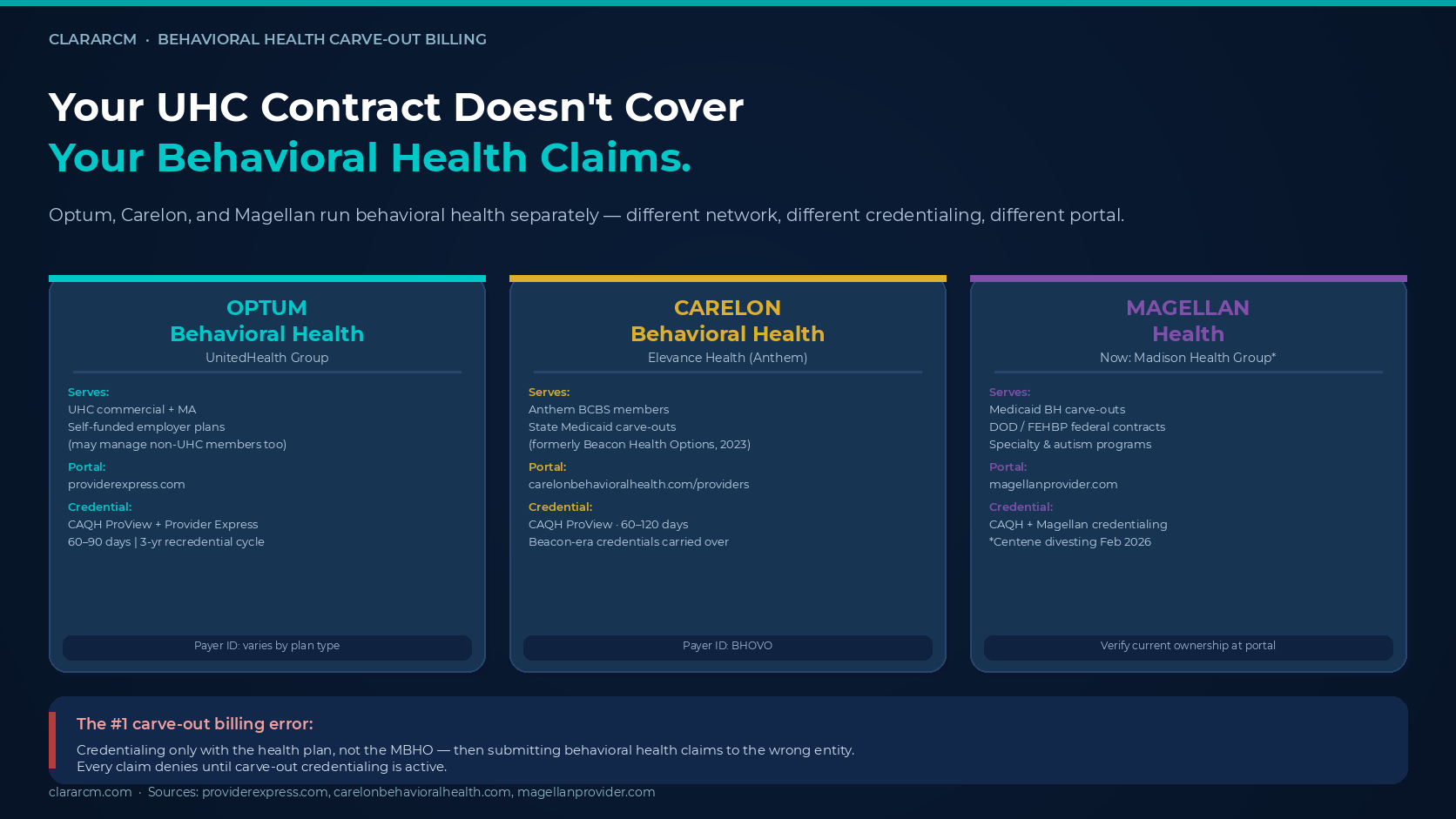
Optum Behavioral Health is a division of Optum, a subsidiary of UnitedHealth Group. When a UHC member needs substance use disorder treatment or mental health services, the authorization decisions, clinical reviews, network credentialing, and utilization management are handled by Optum Behavioral Health through its Provider Express platform — not by UHC’s general medical management. Beyond UHC, Optum also manages behavioral health benefits for many employer self-funded plans that may not have a UnitedHealthcare card at all — meaning providers may encounter Optum managing behavioral health for members whose insurance card names a different plan entirely. Credentialing goes through CAQH ProView plus registration on Provider Express and typically takes 60–90 days. Recredentialing occurs on a three-year cycle.
Carelon Behavioral Health
Carelon Behavioral Health is the current name of the organization previously known as Beacon Health Options. Anthem Inc. (now Elevance Health) acquired Beacon in 2020 and rebranded it as Carelon Behavioral Health in 2023. Carelon manages behavioral health benefits for approximately tens of millions of members as of 2025, serving Anthem Blue Cross Blue Shield plans and many state Medicaid behavioral health carve-outs. The provider portal is at carelonbehavioralhealth.com/providers. BHOVO is the standard payer ID for Carelon Behavioral Health. Credentialing goes through CAQH ProView and typically takes 60–120 days. Beacon-era credentials generally carried over to Carelon, but providers should confirm current network status directly with Carelon provider relations.
If you still have a Beacon Health Options contract: Beacon Health Options no longer exists as an operating entity for claims and authorizations. All provider transactions now go through Carelon Behavioral Health’s portal. If your team is still routing claims to a Beacon contact number or portal, those claims are going nowhere. Update your payer directory immediately.
Magellan Health Services
Magellan became a wholly owned subsidiary of Centene Corporation in January 2022, following a $2.2 billion acquisition. Operationally, Magellan generally continues to function as a distinct MBHO brand with its own provider portal, clinical guidelines, and credentialing workflows. Magellan is particularly significant in the Medicaid behavioral health carve-out space, and holds major federal contracts including the Department of Defense and Federal Employees Health Benefits Program. As of February 2026, Centene announced an agreement to sell Magellan to Madison Health Group, a behavioral health-focused investment firm — with the transaction pending at the time of publication. Providers billing Magellan-managed plans should verify current ownership status and portal access at magellanprovider.com before submitting claims.
Separate Credentialing, Separate Rates in Behavioral Health Carve-Out Billing
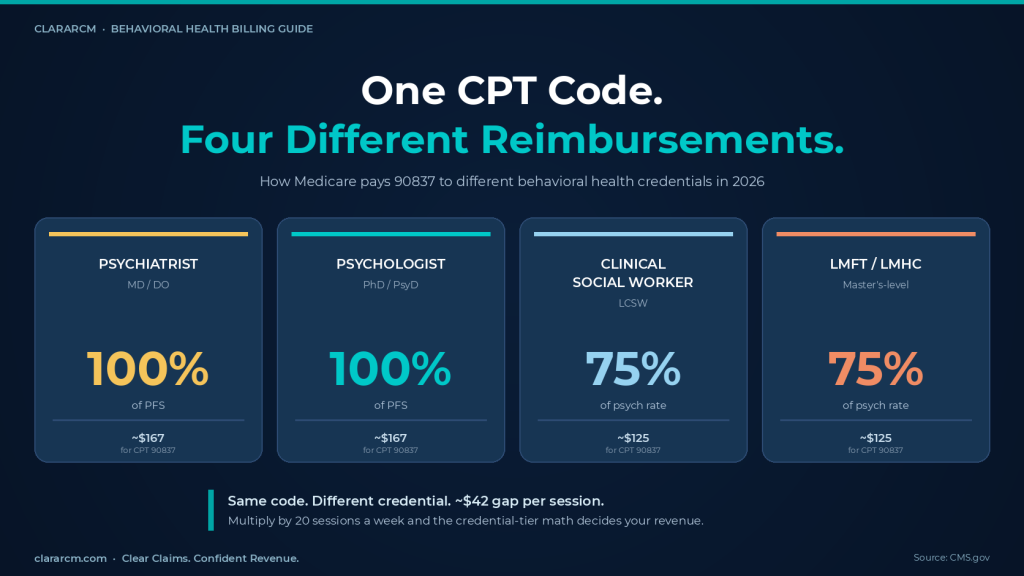
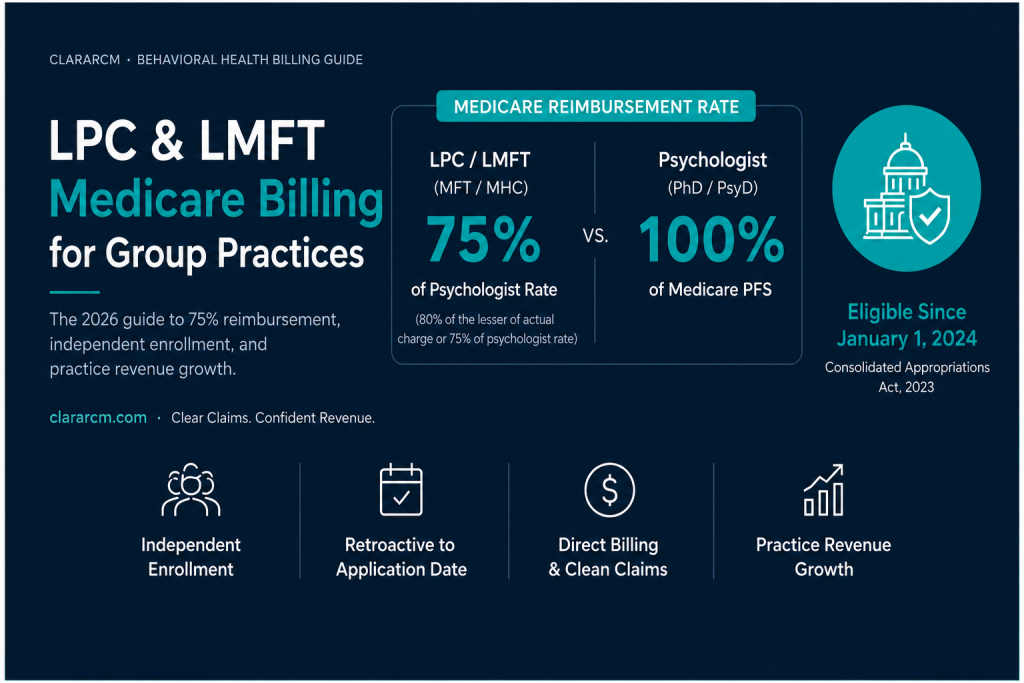
Every MBHO runs its own credentialing process independent of any medical-side network the provider may already be enrolled in — and each sets its own fee schedule, often tiered by provider credential. The tiering mirrors the Medicare structure: psychologists and psychiatrists receive higher rates than master’s-level clinicians for the same CPT code, even within the same plan’s carve-out administrator. A practice with LPCs, LMFTs, and a supervising psychologist on staff may receive three different reimbursement rates from the same MBHO for the same 90837 session.
| Administrator | Parent company / serves | Provider portal | Credentialing |
|---|---|---|---|
| Optum Behavioral Health | UnitedHealth Group / UHC + self-funded employer plans | providerexpress.com | CAQH ProView + Provider Express; 60–90 days; 3-yr recredential |
| Carelon Behavioral Health | Elevance Health / Anthem BCBS + state Medicaid carve-outs (formerly Beacon 2023) | carelonbehavioralhealth.com/providers (Payer ID: BHOVO) | CAQH ProView; 60–120 days; Beacon credentials carried over |
| Magellan Health Services | Centene (sale pending to Madison Health Group, Feb 2026) / Medicaid, DOD, FEHBP | magellanprovider.com | CAQH + Magellan credentialing; verify current status at portal |
Credentialing timelines have a direct revenue impact that most practices undercount. A practice that hires a new LMFT today cannot bill that clinician’s behavioral health carve-out claims for 60–120 days. Practices that don’t initiate MBHO credentialing applications at the hire date routinely leave 2–4 months of claims per new clinician on the table. ClaraRCM’s provider credentialing services initiate MBHO applications at hire and track each administrator’s timeline independently so no claim window is missed.
The Claims-Routing Trap in Behavioral Health Carve-Out Billing
The claims-routing trap is when a practice submits behavioral health claims to the health plan named on the member’s insurance card rather than to the carve-out administrator — and the claim denies for “provider not in network” or “not a covered benefit,” which looks like a credentialing problem when it is actually a routing problem.
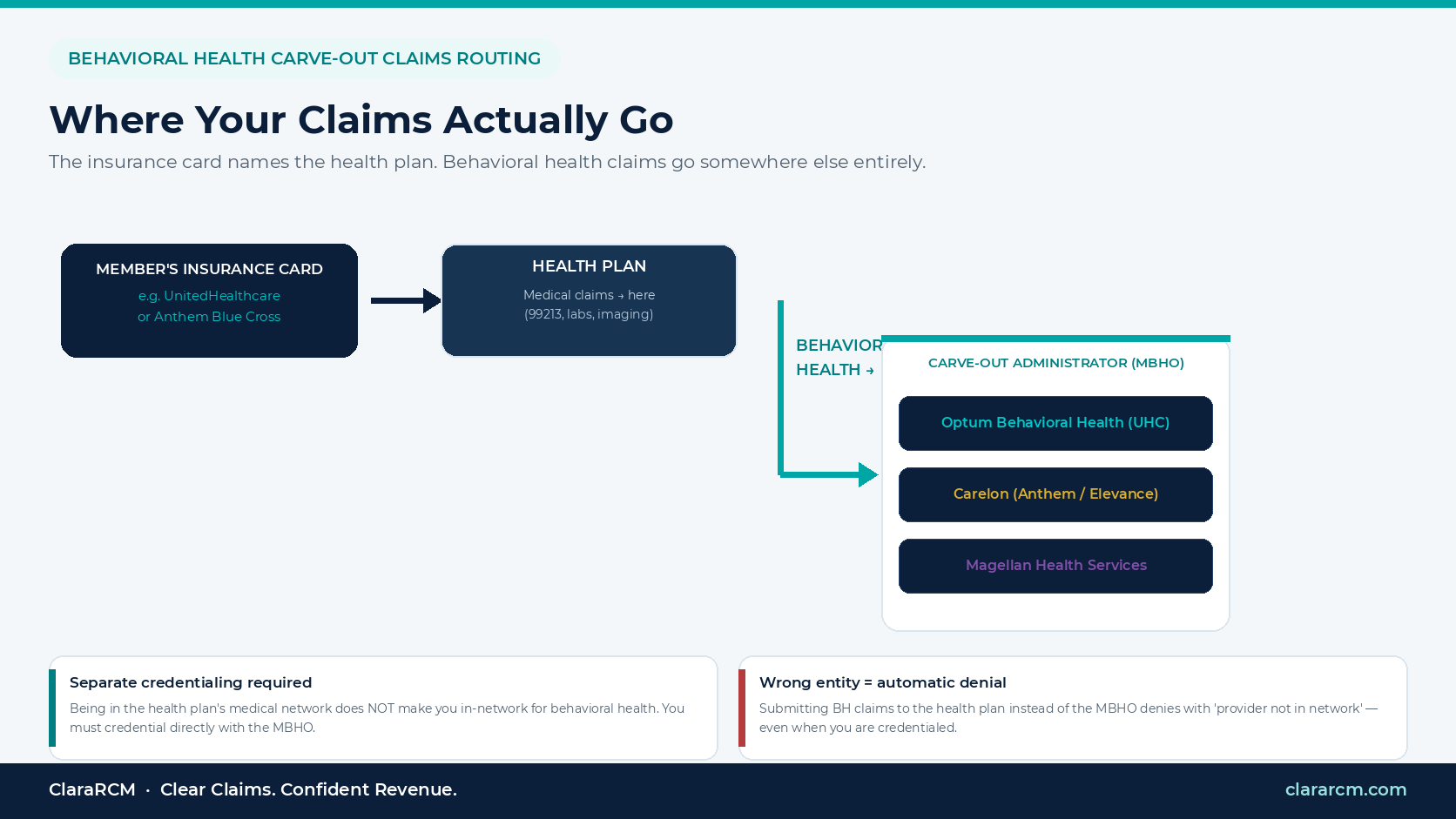
The correct routing check happens at eligibility verification, not at claim submission. When verifying benefits, ask explicitly: “Is behavioral health managed by a separate administrator?” The answer determines where the claim goes.
Three routing traps catch practices that already know about carve-outs:
Self-Funded Employer Plans
Optum manages behavioral health for many self-funded employer plans that don’t show “UnitedHealthcare” on the card at all. The member’s card may be branded under the employer name. Only an eligibility check reveals the carve-out relationship.
Medicaid Managed Care Carve-Outs
Many state Medicaid programs carve out behavioral health to an MBHO. The member’s Medicaid card names the managed care organization; the behavioral health administrator is entirely different and varies by state.
Optum EAP vs. Optum Behavioral Health
Optum also runs an Employee Assistance Program (Live and Work Well) that is entirely separate from its behavioral health medical network. EAP sessions are session-capped, don’t require standard authorization, and don’t route through Provider Express. The two cannot be cross-billed.
Magellan Ownership in Transition
With Centene divesting Magellan to Madison Health Group (February 2026 announcement, pending close), portal access, payer IDs, and contact information may change. Always verify at magellanprovider.com before submitting claims on Magellan-managed lives.
When carve-out routing errors have already generated a backlog, ClaraRCM’s denial management services identify the routing cause, confirm MBHO credentialing status, and resubmit within the timely filing window. Our eligibility and benefits verification process catches carve-out status at intake — before the claim goes out the wrong door.
Frequently Asked Questions About Behavioral Health Carve-Out Billing
What Is a Behavioral Health Carve-Out?
A behavioral health carve-out is when a health plan contracts a separate managed behavioral health organization (MBHO) — such as Optum Behavioral Health, Carelon, or Magellan — to manage mental health and substance use disorder benefits independently from the main medical plan. The MBHO runs its own provider network, credentialing, prior authorizations, and claims processing. Being in-network with the health plan’s medical side does not make you in-network for behavioral health carve-out billing.
Why Did My Claim Go to Optum Instead of UnitedHealthcare?
UnitedHealthcare delegates behavioral health benefits to Optum Behavioral Health, its subsidiary. When a UHC member needs mental health or substance use disorder services, the authorization decisions, clinical reviews, network credentialing, and utilization management are handled by Optum Behavioral Health through its Provider Express platform — not by UHC’s general medical management. Submitting behavioral health claims directly to UHC instead of Optum generates denials or routing delays.
Do Carve-Out Plans Pay Therapists Different Rates by License?
Yes. Behavioral health carve-out administrators frequently apply credential-tiered rate structures, paying psychologists and psychiatrists higher rates than master’s-level clinicians for the same CPT code — mirroring Medicare’s 75%-of-psychologist-rate structure. Your fee schedule addendum from the MBHO credentialing process contains the specific rates for each credential type in your practice. For how to identify when those rates fall below market, see our guide to negotiating behavioral health fee schedules.
Is Beacon Health Options Still a Separate Company?
No. Beacon Health Options was acquired by Anthem (now Elevance Health) in 2020 and fully rebranded as Carelon Behavioral Health in 2023. All provider transactions, authorizations, and claims now go through Carelon’s portal at carelonbehavioralhealth.com/providers. The standard payer ID for Carelon is BHOVO. Legacy Beacon provider agreements transferred to Carelon; the Beacon portal and contact numbers are no longer operational.

Andleeb Asghar, PharmD
RCM Specialist & Founder, ClaraRCM
Andleeb Asghar is a PharmD, medical billing professional, and revenue cycle management specialist with 7+ years of experience across behavioral health billing, payer credentialing, denial management, and end-to-end RCM for U.S. mental health practices.
ClaraRCM provides revenue cycle and medical billing support. This content is for educational purposes and is not legal, clinical, or payer-contract advice.